Camera Obscura
August 27 - September 18, 2026
Exhibition Statement
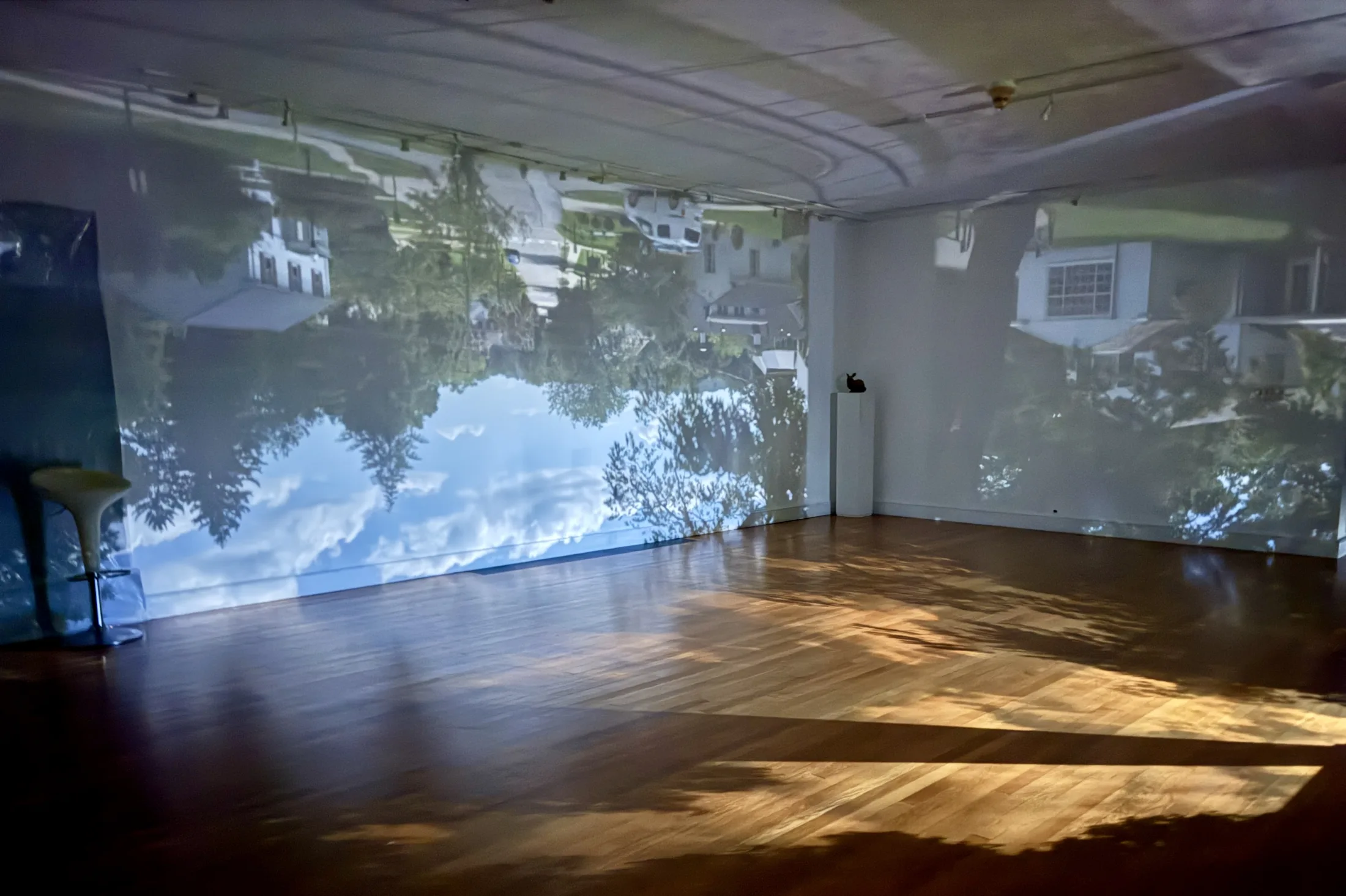
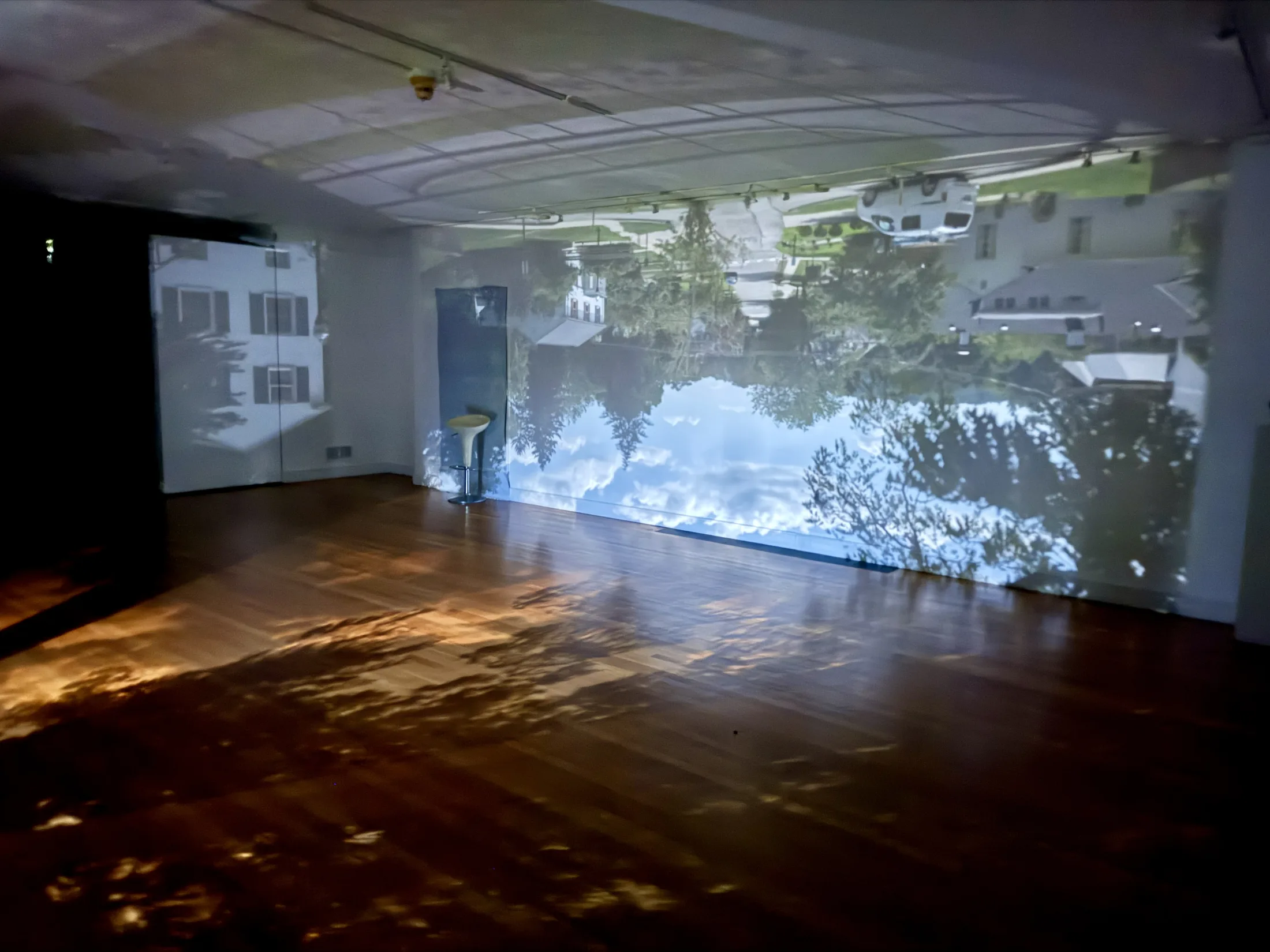
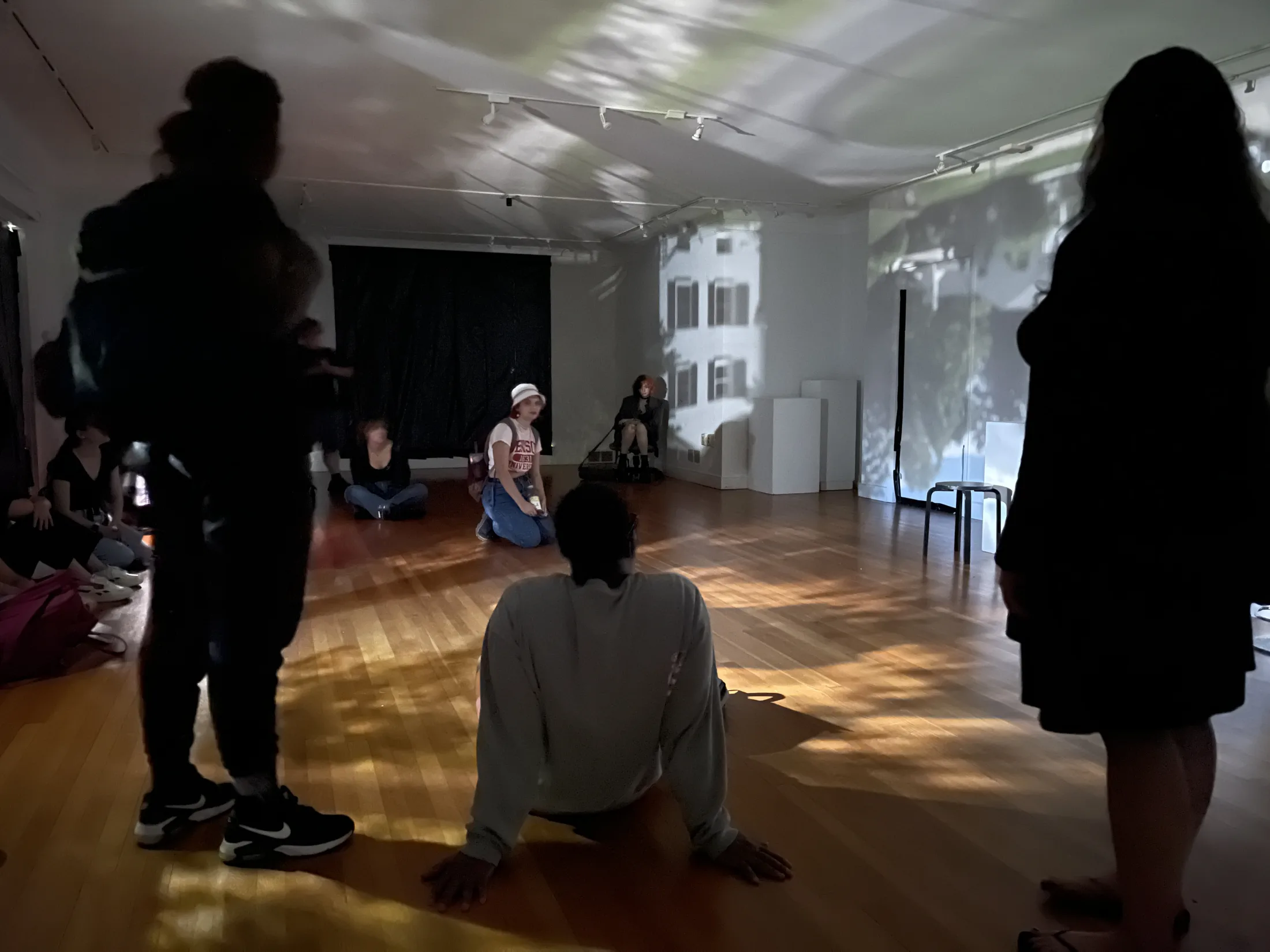
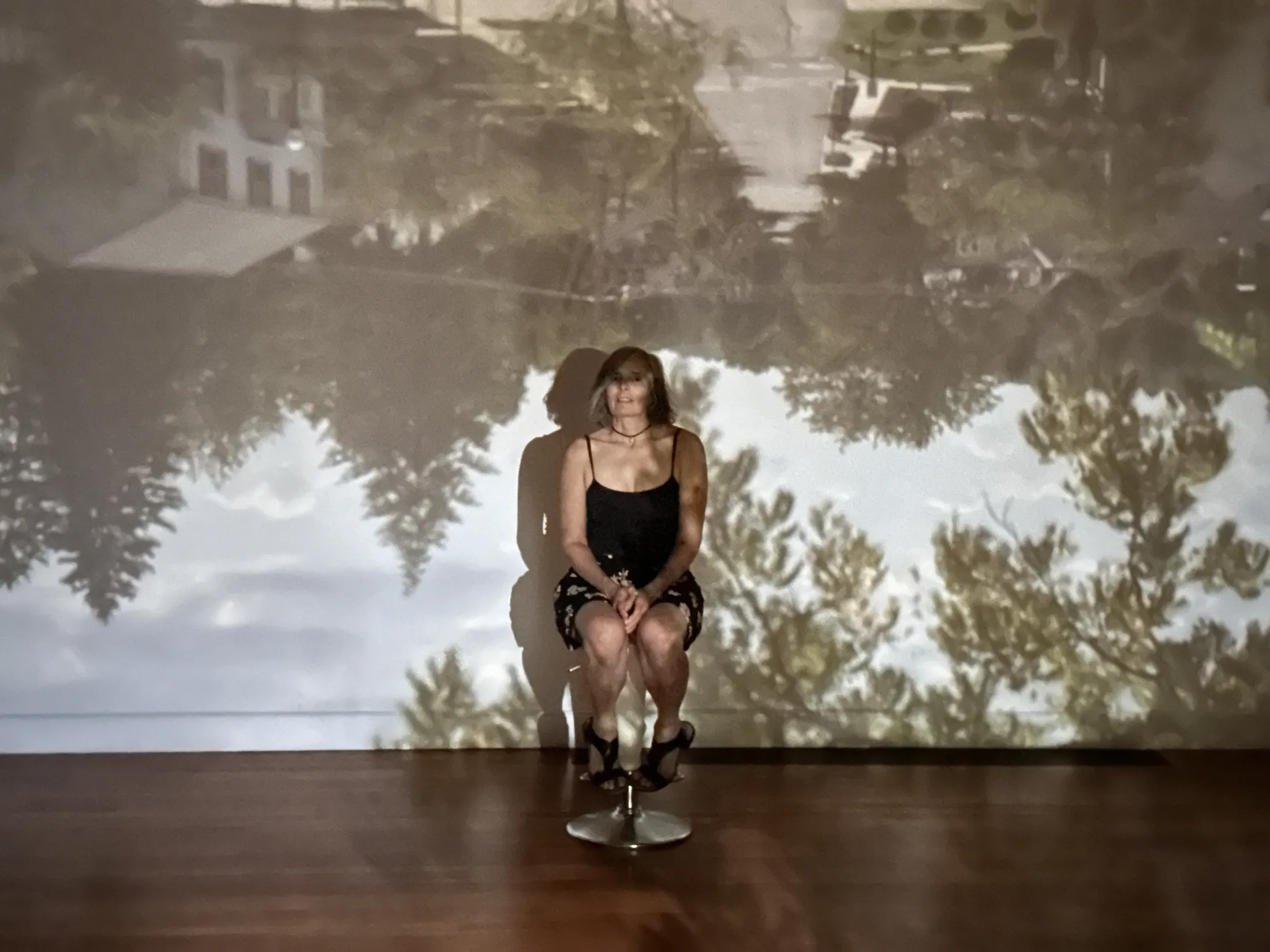
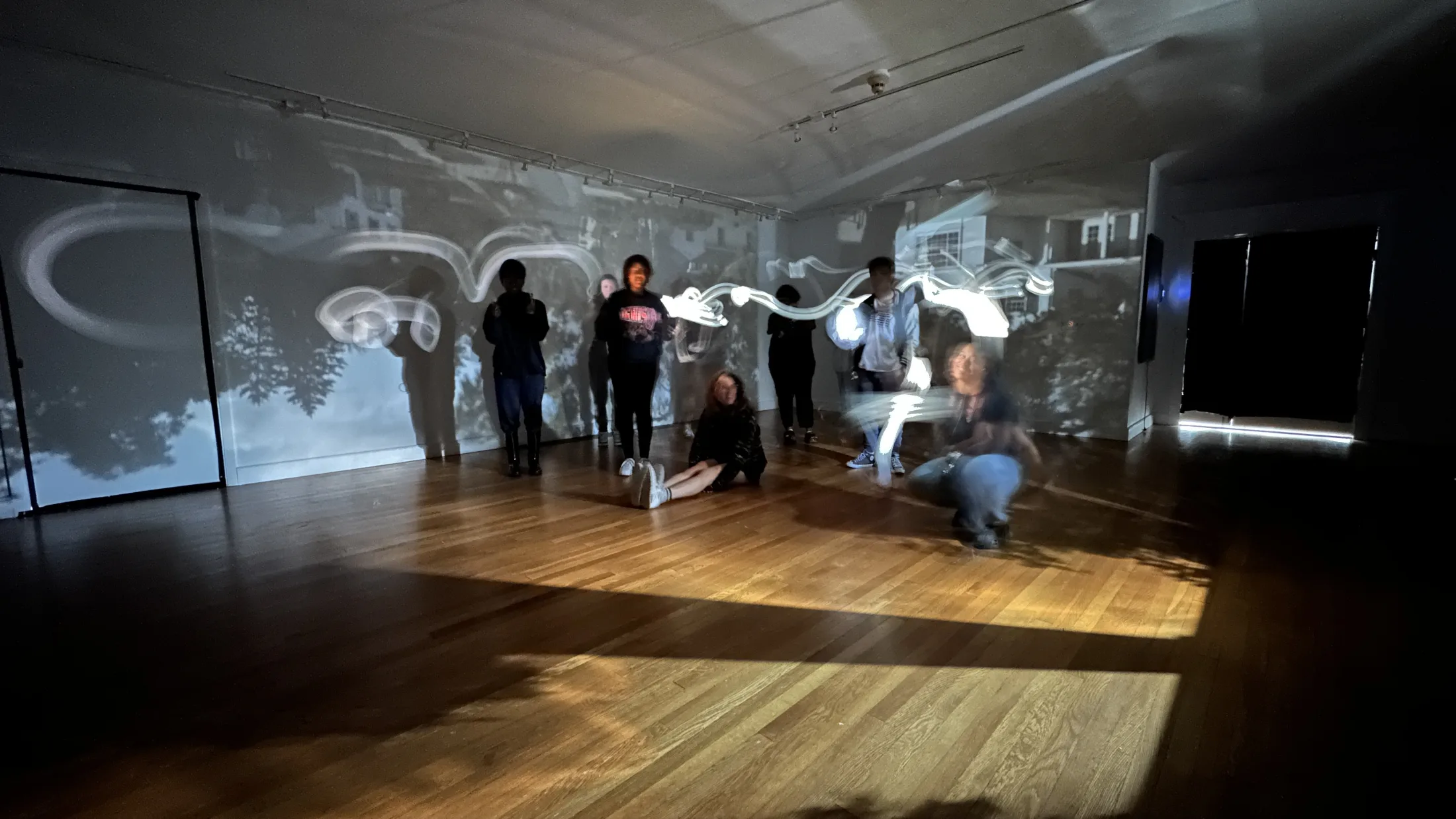
For this exhibit we have turned the gallery into a giant pinhole camera. A single small opening lets light in from one window while the rest of the room stays completely dark. Outside, the world keeps moving, trees swaying, clouds drifting, cars passing, and all of it appears projected upside down across the gallery's walls, floor and ceiling in real time.
Camera obscura is Latin for "dark chamber," and it is the oldest image-making phenomenon we know. Because light travels in straight lines, the rays reflecting off the top of the scene pass through the opening and strike low on the far wall, while rays from the bottom strike high, so the projected picture arrives inverted and reversed. The image is formed the same way that your own eye creates an image on your retina.
In 1604 the astronomer Johannes Kepler gave the device its enduring Latin name in his treatise Ad Vitellionem Paralipomena. In the seventeenth and eighteenth centuries painters carried portable box and tent versions as drawing aids, and scholars still debate whether Johannes Vermeer composed his luminous interiors with one. The architect Philip Steadman, in Vermeer's Camera (2001), showed that the projected images in at least six of Vermeer's paintings correspond exactly to the sizes of the canvases themselves, a coincidence that a Warburg Institute scholar and a Cambridge mathematician calculated as hundreds or thousands to one against chance, while the artist David Hockney, in Secret Knowledge, argued that many old masters relied on such optical aids.
The line runs directly from this dark room to the birth of photography: in 1826-1827 Nicéphore Niépce fixed the first surviving photograph, View from the Window at Le Gras, on a bitumen-coated pewter plate inside a camera obscura, and Louis Daguerre and William Henry Fox Talbot made the medium practical within little more than a decade.
Artists continue to find this irresistible. Since 1991, Abelardo Morell has turned bedrooms and hotel rooms around the world into cameras, photographing the outside city projected over the furniture within. Vera Lutter inhabits room-sized cameras for hours or even weeks, letting light draw its inverted image directly onto paper. For the 2014 Whitney Biennial, Zoe Leonard converted a fourth-floor gallery into an enormous camera obscura, 945 Madison Avenue, part of a series of such rooms she has built since 2011.
This exhibition invites you to slow down, let your eyes adjust to the dark, and watch an image form through the same simple trick of light that shapes both a camera and your own eye. Think of the painters who once used that very trick to look more closely at the world around them. Then step back outside and look at that same world again. It might not look so ordinary anymore.
Details
Exhibition information.
- Date
- August 27 - September 18, 2026
- Opening
- Thursday, August 27, 2026
- Format
- Room-sized camera obscura installation
- Media
- Light, architecture, projected image, and real-time observation